
This dancing raisins science experiment is an easy activity that makes raisins bob up and down like they are dancing! With a handful of raisins (or craisins) and some clear soda, kids can watch the bubbles of carbon dioxide turn an ordinary snack into tiny flotation devices.
This experiment is quick to set up, mesmerizing to watch and my kids had so much fun learning how to make raisins dance. This activity is perfect for kids of all ages and would be great for home or classroom science fun!
Quick Look: Dancing Raisins Experiment
- 🧪 Activity Time: 5 minutes
- ⏳ Total Time: 10-15 minutes of observation
- 🎨 Supplies Needed: Clear soda, clear glass, handful of raisins
- 👀 What Kids Will See: Raisins sink to the bottom, then rise and "dance" as fizzy bubbles lift them up and down
- 🎯 Ages: Preschool through elementary (with supervision for younger kids)
- 👌 Difficulty: Easy, perfect for quick kitchen science or classroom fun
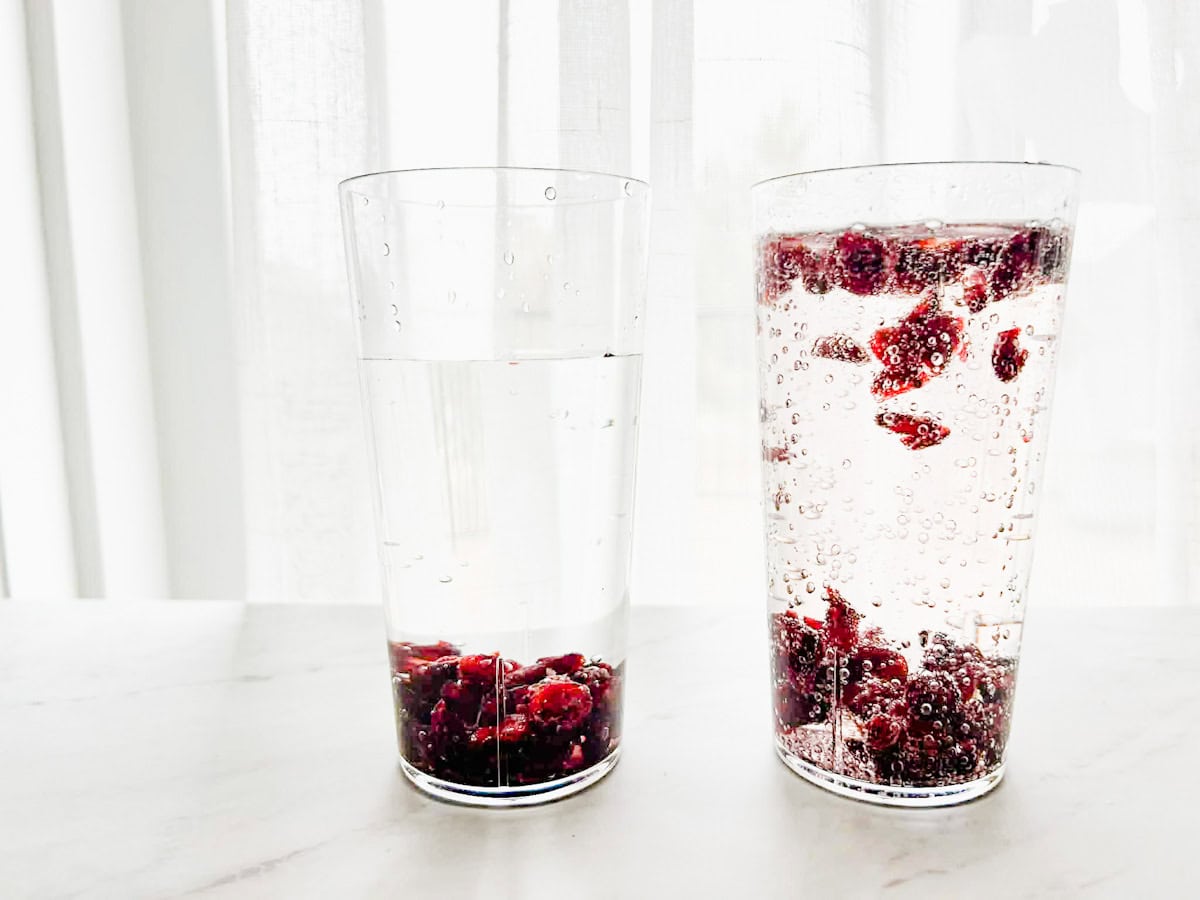
- 💡 Why This Works: Bubbles of carbon dioxide cling to the rough surface of the raisins, turning them into tiny flotation devices that rise to the top before the bubbles pop and the process repeats
SUMMARIZE & SAVE THIS CONTENT ON
My 3 boys love science experiments and this dancing raisins activity is in the top 5 of easiest experiments (alongside this fireworks in a jar and rainbow rain experiment) to set up and clean up! They found it completely entrancing and we were able to sneak in a little learning during it as well.
This experiment encourages observation and prediction and demonstrates buoyancy and density in a hands on way.
During the experiment the raisins sink to the bottom of the cup and then start to rise to the top. As the bubbles pop the raisins start to sink again.
We tried this dancing raisin science activity with one glass of water and one glass of 7-Up to compare the results and add an extra learning element. My kids even snuck a few craisins as a snack while we watched the experiment, which made it even more fun!
Supplies Needed
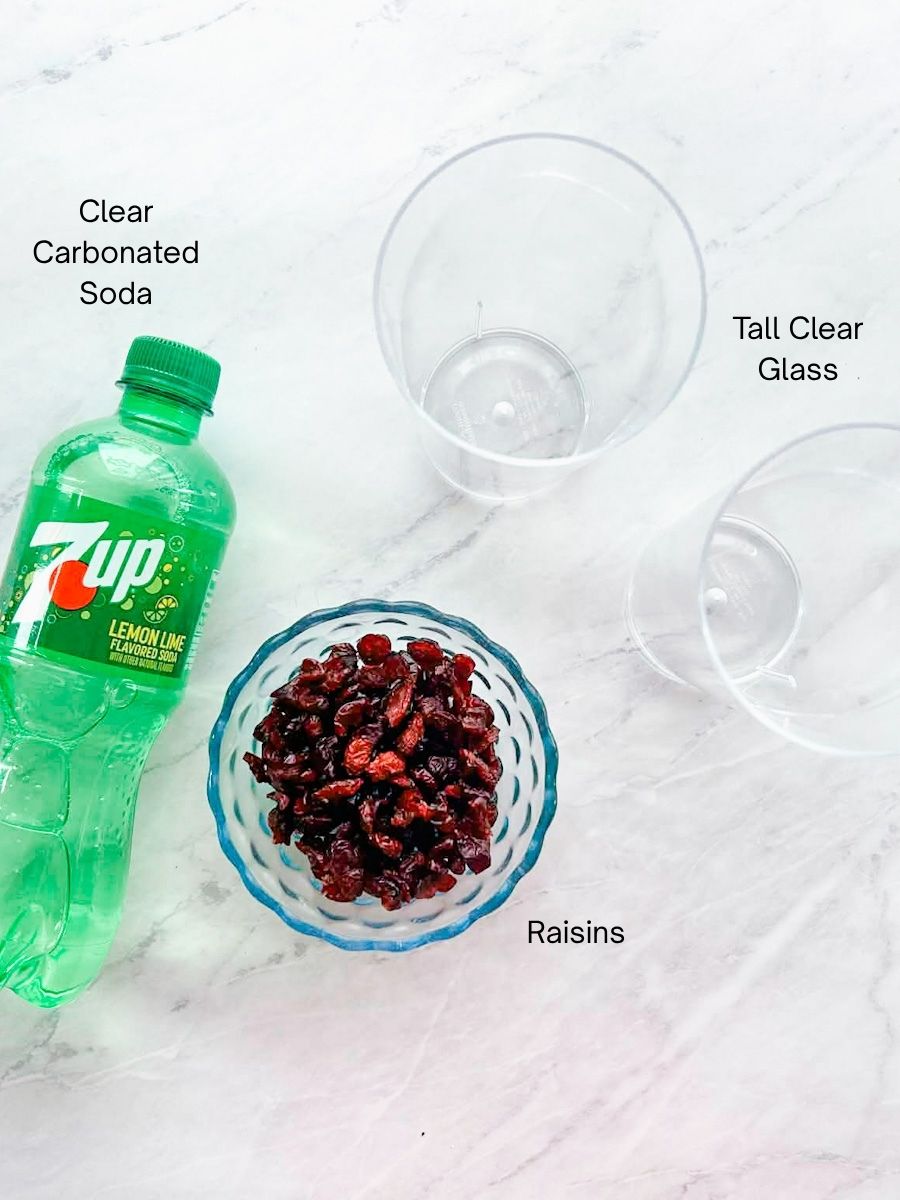
- Clear tall glass: We used 2 so we could do one with water and one with 7-Up, just make sure the glasses are tall so the raisins have room to dance!
- Clear soda like 7 Up or Ginger Ale: You will want clear soda so you can see the raisins.
- Handful of raisins or craisins: Really anything small with a rough surface will work as this allows the carbon dioxide bubbles to attach
How To Make This Dancing Raisins Science Experiment
- Pour clear soda into a tall glass about ¾ full
- In your other glass pour water until ¾ full
- Drop your raisins into the glasses
- Watch them sink to the bottom of the glass
- Observe the glass with soda- tiny bubbles form on the rough surface of the raisins to make them rise to the surface of the water
- See the carbon dioxide bubbles pop at the top of the glass causing the raisins to sink again (and watch this process repeat making the raisins look like they are dancing)
- Compare the water cup (where the raisins sit at the bottom and don't float) to the cup with soda
The Science Behind This Dancing Raisins Experiment
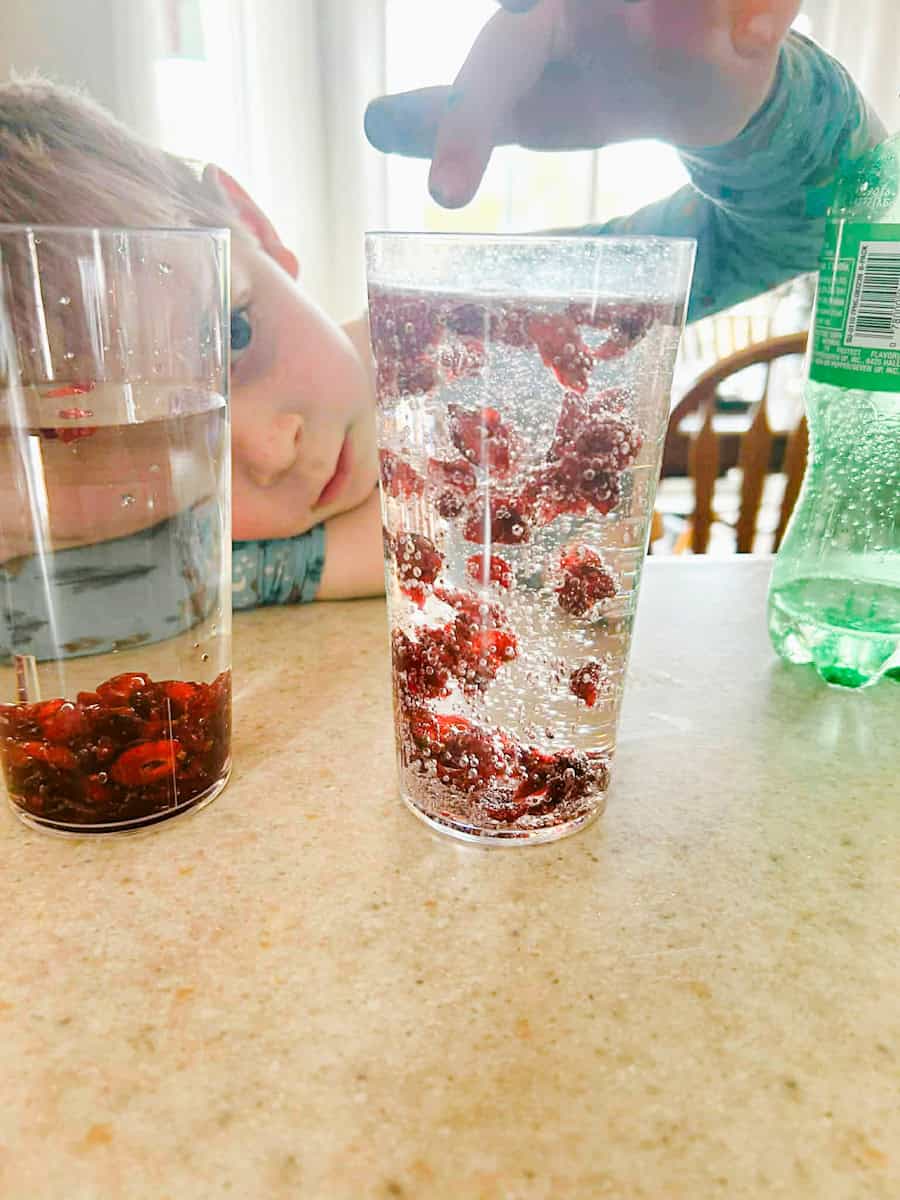
Soda releases carbon dioxide gas bubbles that cling to the rough surface of the raisins.
As bubbles build up, they increase the raisin's buoyancy and lift it to the top like a tiny flotation device.
When the bubbles pop at the surface, the raisin sinks back down. As new bubbles attach, the process repeats, making the raisins appear to dance.
If you loved watching the bubbles at work, you'll also enjoy our bubble science activities like bouncing bubbles and rainbow bubble snakes!
Experiment Questions to Ask your Child
- Why do raisins sink at first?
- What do you see forming on the raisins?
- Why do they rise to the top?
- What happens when the bubbles pop?
- Do you think this would work in a glass of water? (Let them try with a glass of water to see if their prediction is right!)
- Would this work with other objects? (you could try popcorn kernels or uncooked pasta to compare)
Tips & Troubleshooting
- If the raisins don't move your soda may be flat
- Use fresh carbonated beverages for best results
- Use a clear glass so that your child can see the raisins dance
- Medium size raisins work better then really small ones
- No raisins? That's okay, we didn't have any either so we used craisins and that worked well
Dancing Raisin Science Experiment FAQs
Any clear carbonated soda works great for this science experiment!
It can take a few minutes to see your raisins dance, however if you are using a highly carbonated beverage you may see it happen right away.
Carbon dioxide bubbles from the soda cling to the raisins' rough surface, increasing their buoyancy and lifting them to the top like tiny flotation devices. When the bubbles pop, the raisins sink again and as new bubbles attach, the cycle repeats, making them appear to dance.
Other Science Experiments You Will Love
If you tried this Dancing Raisins Experiment or any other activity on our blog please leave a 🌟 star rating let us know how it went in the 📝 comments below. Thanks for visiting!
Dancing Raisins Experiment
Supplies Needed
- 2 Tall clear cups
- 1 bottle 7-Up
- Water
- Raisins
Instructions
- Pour clear soda into a tall glass about ¾ full
- In your other glass pour water until ¾ full
- Drop a handful of raisins into each glass
- Watch the raisins sink to the bottom of the glass
- Observe the glass with soda- tiny bubbles form on the rough surface of the raisins to make them rise to the surface of the water
- Watch the carbon dioxide bubbles pop at the top of the glass causing the raisins to sink again (this process repeats itself making the raisins look like they are dancing)
- Compare the water cup (where the raisins sit at the bottom and don't float) to the cup with soda
Notes
- If the raisins don't move your soda may be flat, use fresh carbonated beverages for best results
- Make sure your glass is clear so that your child can see the raisins dance
- Medium size raisins work better then really small ones
- You can use craisins for this experiment as well




I just did this with my kindergartener and he loved it!